| 名稱 |
Singleton
|
| 結構 |
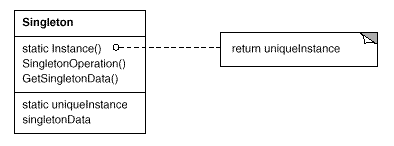
|
| 意圖 |
保證一個類僅有一個實例���,并提供一個訪問它的全局訪問點���。 |
| 適用性 |
- 當類只能有一個實例而且客戶可以從一個眾所周知的訪問點訪問它時。
- 當這個唯一實例應該是通過子類化可擴展的���,并且客戶應該無需更改代碼就能使用一個擴展的實例時。
|
|
|
|
Code Example
 namespace?Singleton_DesignPattern


 {
{
 ????using?System;
????class?Singleton?

 ????{
????{
????????private?static?Singleton?_instance;
????????
????????public?static?Singleton?Instance()
????????{
????????????if?(_instance?==?null)
????????????????_instance?=?new?Singleton();
????????????return?_instance;
 ????????}
????????protected?Singleton(){}
????????//?Just?to?prove?only?a?single?instance?exists
????????private?int?x?=?0;
????????public?void?SetX(int?newVal)?{x?=?newVal;}
????????public?int?GetX(){return?x;}????????
????}
????/**////?<summary>
????///????Summary?description?for?Client.
????///?</summary>
????public?class?Client
????{
????????public?static?int?Main(string[]?args)
????????{
????????????int?val;
????????????//?can't?call?new,?because?constructor?is?protected
????????????Singleton?FirstSingleton?=?Singleton.Instance();?
????????????Singleton?SecondSingleton?=?Singleton.Instance();
????????????//?Now?we?have?two?variables,?but?both?should?refer?to?the?same?object
????????????//?Let's?prove?this,?by?setting?a?value?using?one?variable,?and?
????????????//?(hopefully!)?retrieving?the?same?value?using?the?second?variable
????????????FirstSingleton.SetX(4);
????????????Console.WriteLine("Using?first?variable?for?singleton,?set?x?to?4");????????
????????????val?=?SecondSingleton.GetX();
????????????Console.WriteLine("Using?second?variable?for?singleton,?value?retrieved?=?{0}",?val);????????
????????????return?0;
????????}
????}
 }
}Implementing the Singleton Pattern in C#
The singleton pattern is one of the best-known patterns in software engineering. Essentially, a singleton is a class which only allows a single instance of itself to be created, and usually gives simple access to that instance. Most commonly, singletons don't allow any parameters to be specified when creating the instance - as otherwise a second request for an instance but with a different parameter could be problematic! (If the same instance should be accessed for all requests with the same parameter, the factory pattern is more appropriate.) This article deals only with the situation where no parameters are required. Typically a requirement of singletons is that they are created lazily - i.e. that the instance isn't created until it is first needed.
There are various different ways of implementing the singleton pattern in C#. I shall present them here in reverse order of elegance, starting with the most commonly seen, which is not thread-safe, and working up to a fully lazily-loaded, thread-safe, simple and highly performant version. Note that in the code here, I omit the private modifier, as it is the default for class members. In many other languages such as Java, there is a different default, and private should be used.
All these implementations share four common characteristics, however:
- A single constructor, which is private and parameterless. This prevents other classes from instantiating it (which would be a violation of the pattern). Note that it also prevents subclassing - if a singleton can be subclassed once, it can be subclassed twice, and if each of those subclasses can create an instance, the pattern is violated. The factory pattern can be used if you need a single instance of a base type, but the exact type isn't known until runtime.
- The class is sealed. This is unnecessary, strictly speaking, due to the above point, but may help the JIT to optimise things more.
- A static variable which holds a reference to the single created instance, if any.
- A public static means of getting the reference to the single created instance, creating one if necessary.
Note that all of these implementations also use a public static property Instance as the means of accessing the instance. In all cases, the property could easily be converted to a method, with no impact on thread-safety or performance.
First version - not thread-safe
//?Bad?code!?Do?not?use!
public?sealed?class?Singleton
{
????static?Singleton?instance=null;

????Singleton()
????{
????}

????public?static?Singleton?Instance
????{
????????get
????????{
????????????if?(instance==null)
????????????{
????????????????instance?=?new?Singleton();
????????????}
????????????return?instance;
????????}
????}
}
|
As hinted at before, the above is not thread-safe. Two different threads could both have evaluated the test if (instance==null) and found it to be true, then both create instances, which violates the singleton pattern. Note that in fact the instance may already have been created before the expression is evaluated, but the memory model doesn't guarantee that the new value of instance will be seen by other threads unless suitable memory barriers have been passed.
Second version - simple thread-safety
publicsealedclass?Singleton
{
????static?Singleton?instance=null;
????staticreadonlyobject?padlock?=?newobject();

????Singleton()
????{
????}

????publicstatic?Singleton?Instance
????{
????????get
????????{
????????????lock?(padlock)
????????????{
????????????????if?(instance==null)
????????????????{
????????????????????instance?=?new?Singleton();
????????????????}
????????????????return?instance;
????????????}
????????}
????}
}
|
This implementation is thread-safe. The thread takes out a lock on a shared object, and then checks whether or not the instance has been created before creating the instance. This takes care of the memory barrier issue (as locking makes sure that all reads occur logically after the lock acquire, and unlocking makes sure that all writes occur logically before the lock release) and ensures that only one thread will create an instance (as only one thread can be in that part of the code at a time - by the time the second thread enters it,the first thread will have created the instance, so the expression will evaluate to false). Unfortunately, performance suffers as a lock is acquired every time the instance is requested.
Note that instead of locking on typeof(Singleton) as some versions of this implementation do, I lock on the value of a static variable which is private to the class. Locking on objects which other classes can access and lock on (such as the type) risks performance issues and even deadlocks. This is a general style preference of mine - wherever possible, only lock on objects specifically created for the purpose of locking, or which document that they are to be locked on for specific purposes (e.g. for waiting/pulsing a queue). Usually such objects should be private to the class they are used in. This helps to make writing thread-safe applications significantly easier.
Third version - attempted thread-safety using double-check locking
//?Bad?code!?Do?not?use!
public?sealed?class?Singleton
{
????static?Singleton?instance=null;
????static?readonly?object?padlock?=?new?object();

????Singleton()
????{
????}

????public?static?Singleton?Instance
????{
????????get
????????{
????????????if?(instance==null)
????????????{
????????????????lock?(padlock)
????????????????{
????????????????????if?(instance==null)
????????????????????{
????????????????????????instance?=?new?Singleton();
????????????????????}
????????????????}
????????????}
????????????return?instance;
????????}
????}
}
This implementation attempts to be thread-safe without the necessity of taking out a lock every time. Unfortunately, there are four downsides to the pattern:
- It doesn't work in Java. This may seem an odd thing to comment on, but it's worth knowing if you ever need the singleton pattern in Java, and C# programmers may well also be Java programmers. The Java memory model doesn't ensure that the constructor completes before the reference to the new object is assigned to instance. The Java memory model is going through a reworking for version 1.5, but double-check locking is anticipated to still be broken after this. (Note to self: Java 1.5 has been out for a while - I need to check what the memory model changes are...)
- Without any memory barriers, it's broken in .NET too. Making the
instance variable volatile can make it work, as would explicit memory barrier calls, although in the latter case even experts can't agree exactly which barriers are required. I tend to try to avoid situations where experts don't agree what's right and what's wrong!
- It's easy to get wrong. The pattern needs to be pretty much exactly as above - any significant changes are likely to impact either performance or correctness.
- It still doesn't perform as well as the later implementations.
Fourth version - not quite as lazy, but thread-safe without using locks
public?sealed?class?Singleton
{
????static?readonly?Singleton?instance=new?Singleton();
????//?Explicit?static?constructor?to?tell?C#?compiler//?not?to?mark?type?as?beforefieldinit
????static?Singleton()
????{
????}
????Singleton()
????{
????}
????publicstatic?Singleton?Instance
????{
????????get
????????{
????????????return?instance;
????????}
????}
}
As you can see, this is really is extremely simple - but why is it thread-safe and how lazy is it? Well, static constructors in C# are specified to execute only when an instance of the class is created or a static member is referenced, and to execute only once per AppDomain. Given that this check for the type being newly constructed needs to be executed whatever else happens, it will be faster than adding extra checking as in the previous examples. There are a couple of wrinkles, however:
- It's not as lazy as the other implementations. In particular, if you have static members other than
GetInstance, the first reference to those members will involve creating the instance. This is corrected in the next implementation.
- There are complications if one static constructor invokes another which invokes the first again. Look in the .NET specifications (currently section 9.5.3 of partition II) for more details about the exact nature of type initializers - they're unlikely to bite you, but it's worth being aware of the consequences of static constructors which refer to each other in a cycle.
- The laziness of type initializers is only guaranteed by .NET when the type isn't marked with a special flag called
beforefieldinit. Unfortunately, the C# compiler (as provided in the .NET 1.1 runtime, at least) marks all types which don't have a static constructor (i.e. a block which looks like a constructor but is marked static) as beforefieldinit. I now have a discussion page with more details about this issue. Also note that it affects performance, as discussed near the bottom of this article.
One shortcut you can take with this implementation (and only this one) is to just make instance a public static readonly variable, and get rid of the property entirely. This makes the basic skeleton code absolutely tiny! Many people, however, prefer to have a property in case further action is needed in future, and JIT inlining is likely to make the performance identical. (Note that the static constructor itself is still required if you require laziness.)
Fifth version - fully lazy instantiation
public?sealed?class?Singleton
{
????Singleton()
????{
????}

????public?static?Singleton?Instance
????{
????????get
????????{
????????????return?Nested.instance;
????????}
????}
????
????class?Nested
????{
????????//?Explicit?static?constructor?to?tell?C#?compiler//?not?to?mark?type?as?beforefieldinit
????????static?Nested()
????????{
????????}

????????internal?static?readonly?Singleton?instance?=?new?Singleton();
????}
}
|
Here, instantiation is triggered by the first reference to the static member of the nested class, which only occurs in GetInstance. This means the implementation is fully lazy, but has all the performance benefits of the previous ones. Note that although nested classes have access to the enclosing class's private members, the reverse is not true, hence the need for instance to be internal here. That doesn't raise any other problems, though, as the class itself is private. The code is a bit more complicated in order to make the instantiation lazy, however.
Performance vs laziness
In many cases, you won't actually require full laziness - unless your class initialization does something particularly time-consuming, or has some side-effect elsewhere, it's probably fine to leave out the explicit static constructor shown above. This can increase performance as it allows the JIT compiler to make a single check (for instance at the start of a method) to ensure that the type has been initialized, and then assume it from then on. If your singleton instance is referenced within a relatively tight loop, this can make a (relatively) significant performance difference. You should decide whether or not fully lazy instantiation is required, and document this decision appropriately within the class. (See below for more on performance, however.)
Exceptions
Sometimes, you need to do work in a singleton constructor which may throw an exception, but might not be fatal to the whole application. Potentially, your application may be able to fix the problem and want to try again. Using type initializers to construct the singleton becomes problematic at this stage. Different runtimes handle this case differently, but I don't know of any which do the desired thing (running the type initializer again), and even if one did, your code would be broken on other runtimes. To avoid these problems, I'd suggest using the second pattern listed on the page - just use a simple lock, and go through the check each time, building the instance in the method/property if it hasn't already been successfully built.
Thanks to Andriy Tereshchenko for raising this issue.
A word on performance
A lot of the reason for this page stemmed from people trying to be clever, and thus coming up with the double-checked locking algorithm. There is an attitude of locking being expensive which is common and misguided. I've written a very quick benchmark which just acquires singleton instances in a loop a billion ways, trying different variants. It's not terribly scientific, because in real life you may want to know how fast it is if each iteration actually involved a call into a method fetching the singleton, etc. However, it does show an important point. On my laptop, the slowest solution (by a factor of about 5) is the locking one (solution 2). Is that important? Probably not, when you bear in mind that it still managed to acquire the singleton a billion times in under 40 seconds. That means that if you're "only" acquiring the singleton four hundred thousand times per second, the cost of the acquisition is going to be 1% of the performance - so improving it isn't going to do a lot. Now, if you are acquiring the singleton that often - isn't it likely you're using it within a loop? If you care that much about improving the performance a little bit, why not declare a local variable outside the loop, acquire the singleton once and then loop. Bingo, even the slowest implementation becomes easily adequate.
I would be very interested to see a real world application where the difference between using simple locking and using one of the faster solutions actually made a significant performance difference.
Conclusion (modified slightly on January 7th 2006)
There are various different ways of implementing the singleton pattern in C#. A reader has written to me detailing a way he has encapsulated the synchronization aspect, which while I acknowledge may be useful in a few very particular situations (specifically where you want very high performance, and the ability to determine whether or not the singleton has been created, and full laziness regardless of other static members being called). I don't personally see that situation coming up often enough to merit going further with on this page, but please mail me if you're in that situation.
My personal preference is for solution 4: the only time I would normally go away from it is if I needed to be able to call other static methods without triggering initialization, or if I needed to know whether or not the singleton has already been instantiated. I don't remember the last time I was in that situation, assuming I even have. In that case, I'd probably go for solution 2, which is still nice and easy to get right.
Solution 5 is elegant, but trickier than 2 or 4, and as I said above, the benefits it provides seem to only be rarely useful.
(I wouldn't use solution 1 because it's broken, and I wouldn't use solution 3 because it has no benefits over 5.)
C#面向對象設計模式縱橫談(2):Singleton 單件(創建型模式) ---Level 300
活動日期: 2005-10-25 14:30 -- 16:00
主講:李建忠
________________________________________
Q:使用靜態的計數器一樣可以在單線程中實現只實例化一個對象的目的啊
A:這個應該是不能的���,因為靜態計數器的作用和if (instance == null) 是一樣的,在多線程環境中都會有問題的���。
________________________________________
Q:多線成中的lock可以lock(this)嗎?
A:因為是在靜態屬性中,所以不能訪問this指針���。
________________________________________
Q:為什么雙檢查?
A:單檢查也是可以的,但是單檢查的效率要比雙檢查低——因為同步控制的時間太長了���。雙檢查能夠最高效地實現多線程安全的訪問。
________________________________________
Q:為什么一定要加readonly關鍵字���?
A:這個readonly關鍵字只是不希望客戶程序將Instance字段設置為null等不合理的值。
________________________________________
Q:remoting里面的Singleton對象應該是使用了Singleton模式吧
A:是的���,.NET Remoting中的服務器對象激活中就使用了Singleton模式
________________________________________
Q:怎樣獲得類已經構造的實例的個數?
A:可以在實例構造器中放一個靜態的字段���,來表示計數器——在實例構造器中每次做count++即可。
________________________________________
Q:怎樣區分各個模式���,學了很久,總是搞不清楚他們之間的區別���,經常性的搞混
A:區分模式的最好辦法是搞清楚為什么有這些模式���,各個模式分別應對什么樣的變化���。
________________________________________
Q:當好一個程序員必須要學好設計模式嗎���?它在代碼編寫過程中有什么好處���?怎樣可以學好設計模式���?
A:不一定���,我了解的某些天才程序員對設計模式并不感興趣——主要是因為他們首先不是面向對象程序員J但是學好設計模式對于一個面向對象程序員有莫大幫助���。學好設計模式的關鍵是深刻理解面向對象。
________________________________________
Q:lock 對于singleton本身的類使用與使用 helper有什么區別?
A:本質上沒什么區別,但是別忘了這時候Singleton對象還沒有創建J所以這時候不可能lock一個Singleton對象���。
________________________________________
Q:我有一個疑問���,在singleton設計模式下,什么時候���,由誰來創建這個實例呢?
A:Singleton模式中的“緩式加載”已經說明了Singleton的實例是在客戶程序第一次調用GetInstance方法時才會被創建���。
________________________________________
?
Q:我大致的翻過設計模式這本書���,我想請教下您���,您認為在設計一個很好的面向對象的軟件與程序語言的選擇(比如C#���,C++���,JAVA)二者之間怎么做到最好的搭配
A:我個人認為這三門語言都是很好的面向對象語言���,都能很充分地發揮面向對象的力量���。在面向對象層次上���,它們的差別并不大���。
________________________________________
Q:在多線程環境中���,使用Static實例化一個對象后���,那么它的實例的方法是否可以保證執行時不致沖突���?
A:實例方法在多線程環境中無所謂沖突���,關鍵是實例方法操作的實例數據——如果有的話——有可能沖突。