本篇是
XFile網(wǎng)格的應(yīng)用(2)的續(xù)篇。
上篇介紹了.X文件網(wǎng)格的渲染方法,如果需要創(chuàng)建自己的網(wǎng)格文件,并將它渲染出來,那么可以考慮創(chuàng)建一個空的網(wǎng)格,然后讀取網(wǎng)格文件內(nèi)容,將頂點,材質(zhì)和紋理數(shù)據(jù)寫入以上的網(wǎng)格相關(guān)緩沖區(qū)中。
創(chuàng)建一個自定義頂點格式的空Mesh網(wǎng)格可由 D3DXCreateMeshFVF來實現(xiàn),來看看它的具體信息說明:
Creates a mesh object using a flexible vertex format
(FVF) code.
 HRESULT D3DXCreateMeshFVF(
   DWORD   NumFaces  ,
   DWORD   NumVertices  ,
   DWORD   Options  ,
   DWORD   FVF  ,
   LPDIRECT3DDEVICE9   pD3DDevice  ,
   LPD3DXMESH *   ppMesh
 );
Parameters
- NumFaces
- [in] Number of faces for the mesh. The valid range
for this number is greater than 0, and one less than the max DWORD value,
typically 232 - 1, because the last index is reserved.
- NumVertices
- [in] Number of vertices for the mesh. This
parameter must be greater than 0.
- Options
- [in] Combination of one or more flags from the
D3DXMESH enumeration, specifying creation options for the mesh.
- FVF
- [in] Combination of D3DFVF that describes the
vertex format for the returned mesh. This function does not support
D3DFVF_XYZRHW.
- pD3DDevice
- [in] Pointer to an IDirect3DDevice9 interface, the
device object to be associated with the mesh.
- ppMesh
- [out] Address of a pointer to an ID3DXMesh
interface, representing the created mesh object.
Return Values
If the function succeeds, the return value is D3D_OK.
If the function fails, the return value can be one of the following:
D3DERR_INVALIDCALL, E_OUTOFMEMORY.
空網(wǎng)格創(chuàng)建出來后,用ID3DXMesh接口的LockVertexBuffer函數(shù)取得頂點緩沖區(qū)的指針,這樣就可以將文件的頂點數(shù)據(jù)寫入已鎖定的緩沖區(qū)內(nèi),最后還要調(diào)用UnlockVertexBuffer來進行解鎖。
來看看 LockVertexBuffer函數(shù)的具體信息說明:
Locks a vertex buffer and obtains a pointer to the
vertex buffer memory.
 HRESULT LockVertexBuffer(
   DWORD   Flags  ,
   LPVOID *   ppData
 );
Parameters
- Flags
Combination of zero or more locking flags that
describe the type of lock to perform. For this method, the valid flags are:
- D3DLOCK_DISCARD
- D3DLOCK_NO_DIRTY_UPDATE
- D3DLOCK_NOSYSLOCK
- D3DLOCK_READONLY
- D3DLOCK_NOOVERWRITE
- [in] For a description of the flags, see D3DLOCK.
- ppData
- [out, retval] VOID* pointer to a buffer containing
the vertex data.
Return Values
If the method succeeds, the return value is D3D_OK. If
the method fails, the return value can be D3DERR_INVALIDCALL.
Remarks
When working with vertex buffers, you are allowed to
make multiple lock calls; however, you must ensure that the number of lock calls
match the number of unlock calls. DrawPrimitive calls will not succeed with any
outstanding lock count on any currently set vertex buffer.
來看看參數(shù)Flags可以使用的D3DLOCK的具體定義:
A combination of zero or more
locking options that describe the type of lock to perform.
|
#define |
Description |
|
D3DLOCK_DISCARD |
The
application discards all memory within the locked region. For vertex and
index buffers, the entire buffer will be discarded. This option is only
valid when the resource is created with dynamic usage (see D3DUSAGE).
|
|
D3DLOCK_DONOTWAIT |
Allows an
application to gain back CPU cycles if the driver cannot lock the
surface immediately. If this flag is set and the driver cannot lock the
surface immediately, the lock call will return D3DERR_WASSTILLDRAWING.
This flag can only be used when locking a surface created using
IDirect3DDevice9::CreateOffscreenPlainSurface,
IDirect3DDevice9::CreateRenderTarget, or
IDirect3DDevice9::CreateDepthStencilSurface. This flag can also be used
with a back buffer. |
|
D3DLOCK_NO_DIRTY_UPDATE |
By default,
a lock on a resource adds a dirty region to that resource. This option
prevents any changes to the dirty state of the resource. Applications
should use this option when they have additional information about the
set of regions changed during the lock operation. |
|
D3DLOCK_NOOVERWRITE |
Indicates
that memory that was referred to in a drawing call since the last lock
without this flag will not be modified during the lock. This can enable
optimizations when the application is appending data to a resource.
Specifying this flag enables the driver to return immediately if the
resource is in use, otherwise, the driver must finish using the resource
before returning from locking. |
|
D3DLOCK_NOSYSLOCK |
The default
behavior of a video memory lock is to reserve a system-wide critical
section, guaranteeing that no display mode changes will occur for the
duration of the lock. This option causes the system-wide critical
section not to be held for the duration of the lock.
The lock
operation is time consuming, but can enable the system to perform other
duties, such as moving the mouse cursor. This option is useful for
long-duration locks, such as the lock of the back buffer for software
rendering that would otherwise adversely affect system responsiveness.
|
|
D3DLOCK_READONLY |
The
application will not write to the buffer. This enables resources stored
in non-native formats to save the recompression step when unlocking. |
再來看看UnlockVertexBuffer函數(shù)的具體信息說明:
Unlocks a vertex buffer.
HRESULT UnlockVertexBuffer();
Parameters
None.
Return Values
If the method succeeds, the return value is D3D_OK. If
the method fails, the return value can be D3DERR_INVALIDCALL.
同樣,利用ID3DXMesh接口的LockIndexBuffer和UnlockIndexBuffer函數(shù),可鎖定頂點索引緩沖區(qū),并寫入三角形面的頂點索引值,然后解鎖。
LockIndexBuffer的具體使用信息如下所示:
Locks an index buffer and obtains a pointer to the
index buffer memory.
 HRESULT LockIndexBuffer(
   DWORD   Flags  ,
   LPVOID *   ppData
 );
Parameters
- Flags
Combination of zero or more locking flags that
describe the type of lock to perform. For this method, the valid flags are:
- D3DLOCK_DISCARD
- D3DLOCK_NO_DIRTY_UPDATE
- D3DLOCK_NOSYSLOCK
- D3DLOCK_READONLY
- [in] For a description of the flags, see D3DLOCK.
- ppData
- [out, retval] VOID* pointer to a buffer containing
the index data. The count of indices in this buffer will be equal to
ID3DXBaseMesh::GetNumFaces * 3.
Return Values
If the method succeeds, the return value is D3D_OK. If
the method fails, the return value can be D3DERR_INVALIDCALL.
Remarks
When working with index buffers, you are allowed to
make multiple lock calls. However, you must ensure that the number of lock calls
match the number of unlock calls. DrawPrimitive calls will not succeed with any
outstanding lock count on any currently set index buffer.
該函數(shù)使用信息說明中提到的GetNumFaces用來獲取該網(wǎng)格包含的三角形面數(shù),信息說明如下所示:
Retrieves the number of faces in the mesh.
DWORD GetNumFaces();
Parameters
None.
Return Values
Returns the number of faces in the mesh.
再來看看UnlockIndexBuffer的使用說明:
Unlocks an index buffer.
HRESULT UnlockIndexBuffer();
Parameters
None.
Return Values
If the method succeeds, the return value is D3D_OK. If
the method fails, the return value can be D3DERR_INVALIDCALL.
接著我們可以利用ID3DXMesh接口的LockAttributeBuffer函數(shù)鎖定屬性緩沖區(qū),并取得緩沖區(qū)的指針,然后將每個三角形面的子集號寫入,最后調(diào)用該接口的UnlockAttributeBuffer函數(shù)將緩沖區(qū)解鎖。
來看看LockAttributeBuffer的使用說明:
Locks the mesh buffer that contains the mesh attribute
data, and returns a pointer to it.
 HRESULT LockAttributeBuffer(
   DWORD   Flags  ,
   DWORD **   ppData
 );
Parameters
- Flags
Combination of zero or more locking flags that
describe the type of lock to perform. For this method, the valid flags are:
- D3DLOCK_DISCARD
- D3DLOCK_NO_DIRTY_UPDATE
- D3DLOCK_NOSYSLOCK
- D3DLOCK_READONLY
- [in] For a description of the flags, see D3DLOCK.
- ppData
- [out] Address of a pointer to a buffer containing
a DWORD for each face in the mesh.
Return Values
If the method succeeds, the return value is D3D_OK. If
the method fails, the return value can be D3DERR_INVALIDCALL.
Remarks
If ID3DXMesh::Optimize has been called, the mesh will
also have an attribute table that can be accessed using the
ID3DXBaseMesh::GetAttributeTable method.
再來看看UnlockAttributeBuffer的使用說明:
Unlocks an attribute buffer.
HRESULT UnlockAttributeBuffer();
Parameters
None.
Return Values
If the method succeeds, the return value is D3D_OK. If
the method fails, the return value can be D3DERR_INVALIDCALL.
如果網(wǎng)格沒有提供各頂點的法向量坐標數(shù)據(jù),可使用ID3DXMesh接口的CloneMeshFVF函數(shù)復制生成一個包含法向量的網(wǎng)格,然后調(diào)用D3DXComputeNormals計算各頂點的法向量。
來看看CloneMeshFVF的使用說明:
Clones a mesh using a flexible vertex format (FVF)
code.
 HRESULT CloneMeshFVF(
   DWORD   Options  ,
   DWORD   FVF  ,
   LPDIRECT3DDEVICE9   pDevice  ,
   LPD3DXMESH *   ppCloneMesh
 );
Parameters
- Options
- [in] A combination of one or more D3DXMESH flags
specifying creation options for the mesh.
- FVF
- [in] Combination of FVF codes, which specifies the
vertex format for the vertices in the output mesh. For the values of the
codes, see D3DFVF.
- pDevice
- [in] Pointer to an IDirect3DDevice9 interface
representing the device object associated with the mesh.
- ppCloneMesh
- [out, retval] Address of a pointer to an ID3DXMesh
interface, representing the cloned mesh.
Return Values
If the method succeeds, the return value is D3D_OK. If
the method fails, the return value can be one of the following:
D3DERR_INVALIDCALL, E_OUTOFMEMORY.
Remarks
ID3DXBaseMesh::CloneMeshFVF is used to reformat and
change the vertex data layout. This is done by creating a new mesh object. For
example, use it to to add space for normals, texture coordinates, colors,
weights, etc. that were not present before.
ID3DXBaseMesh::UpdateSemantics updates the vertex
declaration with different semantic information without changing the layout of
the vertex buffer. This method does not modify the contents of the vertex
buffer. For example, use it to relabel a 3D texture coordinate as a binormal or
tangent or vice versa.
以及D3DXComputeNormals的使用說明:
Computes unit normals for each vertex in a mesh.
Provided to support legacy applications. Use D3DXComputeTangentFrameEx for
better results.
 HRESULT D3DXComputeNormals(
   LPD3DXBASEMESH   pMesh  ,
   CONST DWORD *   pAdjacency
 );
Parameters
- pMesh
- [in, out] Pointer to an ID3DXBaseMesh interface,
representing the normalized mesh object. This function may not take an
ID3DXPMesh progressive mesh as input.
- pAdjacency
- [in] Pointer to an array of three DWORDs per face
that specify the three neighbors for each face in the created progressive
mesh. This parameter is optional and should be set to NULL if it is unused.
Return Values
If the function succeeds, the return value is S_OK. If
the function fails, the return value can be one of the following:
D3DERR_INVALIDCALL, D3DXERR_INVALIDDATA, E_OUTOFMEMORY.
Remarks
The input mesh must have the D3DFVF_NORMAL flag
specified in its flexible vertex format (FVF).
A normal for a vertex is generated by averaging the
normals of all faces that share that vertex.
If adjacency is provided, replicated vertices are
ignored and "smoothed" over. If adjacency is not provided, replicated vertices
will have normals averaged in from only the faces explicitly referencing them.
This function simply calls
D3DXComputeTangentFrameEx with the following input parameters:
D3DXComputeTangentFrameEx( pMesh,
                           D3DX_DEFAULT,
                           0,
                           D3DX_DEFAULT,
                           0,
                           D3DX_DEFAULT,
                           0,
                           D3DDECLUSAGE_NORMAL,
                           0,
                           D3DXTANGENT_GENERATE_IN_PLACE | D3DXTANGENT_CALCULATE_NORMALS,
                           pAdjacency,
                           -1.01f,
                           -0.01f,
                           -1.01f,
                           NULL,
                           NULL);
下面的代碼通過復制的方法生成了一個具有頂點法向量信息的網(wǎng)格:
LPD3DXMESH mesh;
LPD3DXMESH mesh_clone = NULL;
mesh->CloneMeshFVF(mesh->GetOptions(), mesh->GetFVF() | D3DFVF_NORMAL, _d3d_device, &mesh_clone);
D3DXComputeNormals(mesh_clone, NULL);
Mesh數(shù)據(jù)的優(yōu)化
.X文件的網(wǎng)格數(shù)據(jù)裝入緩沖區(qū)后,每個網(wǎng)格子集的數(shù)據(jù)可以進行優(yōu)化,以提高子集渲染速度。對于頂點緩沖區(qū)來說,可以把位于同一個子集的頂點進行連續(xù)排放,減少三角形面的索引,也可以對鄰接的頂點進行壓縮,節(jié)省內(nèi)存消耗和提高頂點的命中率。對于頂點索引緩沖區(qū)來說,該緩沖區(qū)提供了網(wǎng)格的所有三角形面的構(gòu)成信息,如果把位于同一個子集的三角形面集中連續(xù)排放,就可以使屬性緩沖區(qū)的子集編號按序排列。
ID3DXMesh接口提供了OptimizeInplace 函數(shù)進行網(wǎng)格數(shù)據(jù)各種類型的優(yōu)化,它的使用說明如下所示:
Generates a mesh with reordered faces and vertices to
optimize drawing performance. This method reorders the existing mesh.
 HRESULT OptimizeInplace(
   DWORD   Flags  ,
   CONST DWORD *   pAdjacencyIn  ,
   DWORD *   pAdjacencyOut  ,
   DWORD *   pFaceRemap  ,
   LPD3DXBUFFER *   ppVertexRemap
 );
Parameters
- Flags
- [in] Combination of one or more D3DXMESHOPT flags,
specifying the type of optimization to perform.
- pAdjacencyIn
- [in] Pointer to an array of three DWORDs per face
that specifies the three neighbors for each face in the source mesh. If the
edge has no adjacent faces, the value is 0xffffffff.
- pAdjacencyOut
- [out] Pointer to an array of three DWORDs per face
that specifies the three neighbors for each face in the optimized mesh. If
the edge has no adjacent faces, the value is 0xffffffff. If the value
supplied for this argument is NULL, adjacency data is not returned.
- pFaceRemap
- [out] An array of DWORDs, one per face, that
identifies the original mesh face that corresponds to each face in the
optimized mesh. If the value supplied for this argument is NULL, face remap
data is not returned.
- ppVertexRemap
- [out] Address of a pointer to an ID3DXBuffer
interface, which contains a DWORD for each vertex that specifies how the new
vertices map to the old vertices. This remap is useful if you need to alter
external data based on the new vertex mapping. If the value supplied for
this argument is NULL, vertex remap data is not returned.
Return Values
If the method succeeds, the return value is D3D_OK. If
the method fails, the return value can be one of the following:
D3DERR_INVALIDCALL, D3DXERR_CANNOTATTRSORT, E_OUTOFMEMORY.
Remarks
Before running ID3DXMesh::OptimizeInplace, an
application must generate an adjacency buffer by calling
ID3DXBaseMesh::GenerateAdjacency. The adjacency buffer contains adjacency data,
such as a list of edges and the faces that are adjacent to each other.
Note This
method will fail if the mesh is sharing its vertex buffer with another mesh,
unless the D3DXMESHOPT_IGNOREVERTS is set in Flags.
下面來看看參數(shù)Flags可以使用的網(wǎng)格優(yōu)化類型D3DXMESHOPT的具體定義:
Specifies the type of mesh optimization to be
performed.
typedef enum D3DXMESHOPT
{
    D3DXMESHOPT_COMPACT = 0x01000000,
    D3DXMESHOPT_ATTRSORT = 0x02000000,
    D3DXMESHOPT_VERTEXCACHE = 0x04000000,
    D3DXMESHOPT_STRIPREORDER = 0x08000000,
    D3DXMESHOPT_IGNOREVERTS = 0x10000000,
    D3DXMESHOPT_DONOTSPLIT = 0x20000000,
    D3DXMESHOPT_DEVICEINDEPENDENT = 0x40000000,
} D3DXMESHOPT, *LPD3DXMESHOPT;
Constants
- D3DXMESHOPT_COMPACT
- Reorders faces to remove unused vertices and
faces.
- D3DXMESHOPT_ATTRSORT
- Reorders faces to optimize for fewer attribute
bundle state changes and enhanced ID3DXBaseMesh::DrawSubset performance.
- D3DXMESHOPT_VERTEXCACHE
- Reorders faces to increase the cache hit rate of
vertex caches.
- D3DXMESHOPT_STRIPREORDER
- Reorders faces to maximize length of adjacent
triangles.
- D3DXMESHOPT_IGNOREVERTS
- Optimize the faces only; do not optimize the
vertices.
- D3DXMESHOPT_DONOTSPLIT
- While attribute sorting, do not split vertices
that are shared between attribute groups.
- D3DXMESHOPT_DEVICEINDEPENDENT
- Affects the vertex cache size. Using this flag
specifies a default vertex cache size that works well on legacy hardware.
Remarks
The D3DXMESHOPT_STRIPREORDER and
D3DXMESHOPT_VERTEXCACHE optimization flags are mutually exclusive.
The D3DXMESHOPT_SHAREVB flag has been removed from this
enumeration. Use D3DXMESH_VB_SHARE instead, in D3DXMESH.
D3DXLoadMeshFromX函數(shù)裝入.X文件時,會自動為網(wǎng)格填充一個三角形面的鄰接數(shù)組緩沖區(qū),也可以利用
ID3DXMesh接口提供的GenerateAdjacency函數(shù)來生成,下面是該函數(shù)的具體使用說明:
Generate a list of mesh edges, as well as a list of
faces that share each edge.
 HRESULT GenerateAdjacency(
   FLOAT   Epsilon  ,
   DWORD *   pAdjacency
 );
Parameters
- Epsilon
- [in] Specifies that vertices that differ in
position by less than epsilon should be treated as coincident.
- pAdjacency
- [in] Pointer to an array of three DWORDs per face
to be filled with the indices of adjacent faces. The number of bytes in this
array must be at least 3 * ID3DXBaseMesh::GetNumFaces * sizeof(DWORD).
Return Values
If the method succeeds, the return value is D3D_OK. If
the method fails, the return value can be one of the following:
D3DERR_INVALIDCALL, E_OUTOFMEMORY.
Remarks
After an application generates adjacency information
for a mesh, the mesh data can be optimized for better drawing performance.
The order of the entries in the adjacency buffer is
determined by the order of the vertex indices in the index buffer. The adjacent
triangle 0 always corresponds to the edge between the indices of the corners 0
and 1. The adjacent triangle 1 always corresponds to the edge between the
indices of the corners 1 and 2 while the adjacent triangle 2 corresponds to the
edge between the indices of the corners 2 and 0.
下面的代碼段給出了利用OptimizeInplace進行優(yōu)化的示例:
    // Generates a mesh with reordered faces and vertices to optimize drawing performance.
    // This method reorders the existing mesh.
    _mesh->OptimizeInplace(D3DXMESHOPT_COMPACT | D3DXMESHOPT_ATTRSORT | D3DXMESHOPT_VERTEXCACHE,
        (DWORD*) _adjacency_buffer->GetBufferPointer(), NULL, NULL, NULL);
值得一提的是,進行D3DXMESHOPT_ATTRSORT優(yōu)化操作后,將生成一個Attribute
Table,它是一個D3DXATTRIBUTERANGE類型的數(shù)組,反映了優(yōu)化后的子集的三角形面的劃分和頂點的劃分。
D3DXATTRIBUTERANGE的具體定義如下所示:
Stores an attribute table entry.
typedef struct D3DXATTRIBUTERANGE {
    DWORD AttribId;
    DWORD FaceStart;
    DWORD FaceCount;
    DWORD VertexStart;
    DWORD VertexCount;
} D3DXATTRIBUTERANGE, *LPD3DXATTRIBUTERANGE;
Members
- AttribId
- Attribute table identifier.
- FaceStart
- Starting face.
- FaceCount
- Face count.
- VertexStart
- Starting vertex.
- VertexCount
- Vertex count.
Remarks
An attribute table is used to identify areas of the
mesh that need to be drawn with different textures, render states, materials,
and so on. In addition, the application can use the attribute table to hide
portions of a mesh by not drawing a given attribute identifier (AttribId) when
drawing the frame.
The LPD3DXATTRIBUTERANGE type is defined as a pointer
to the D3DXATTRIBUTERANGE structure.
typedef D3DXATTRIBUTERANGE* LPD3DXATTRIBUTERANGE;
可以調(diào)用ID3DXMesh接口的GetAttribute方法來獲得指向?qū)傩员淼闹羔樅蛯傩员淼拇笮。摵瘮?shù)具體說明如下:
Retrieves either an attribute table for a mesh, or the
number of entries stored in an attribute table for a mesh.
 HRESULT GetAttributeTable(
   D3DXATTRIBUTERANGE *   pAttribTable  ,
   DWORD *   pAttribTableSize
 );
Parameters
- pAttribTable
- [in, out] Pointer to an array of
D3DXATTRIBUTERANGE structures, representing the entries in the mesh's
attribute table. Specify NULL to retrieve the value for pAttribTableSize.
- pAttribTableSize
- [in, out] Pointer to either the number of entries
stored in pAttribTable or a value to be filled in with the number of entries
stored in the attribute table for the mesh.
Return Values
If the method succeeds, the return value is D3D_OK. If
the method fails, the return value can be D3DERR_INVALIDCALL.
Remarks
An attribute table is created by ID3DXMesh::Optimize
and passing D3DXMESHOPT_ATTRSORT for the Flags parameter.
An attribute table is used to identify areas of the
mesh that need to be drawn with different textures, render states, materials,
and so on. In addition, the application can use the attribute table to hide
portions of a mesh by not drawing a given attribute identifier when drawing the
frame.
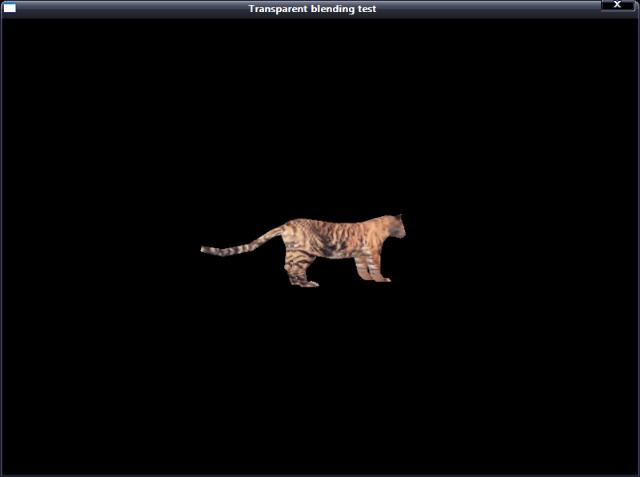
好了,現(xiàn)在來看一個例子。
需要在工程中設(shè)置鏈接d3dx9.lib d3d9.lib dinput8.lib
dxguid.lib winmm.lib。
由于文件中用到了GE_APP和GE_INPUT這兩個類,它的具體使用說明請參閱
主窗口和DirectInput的封裝。
文件中同時還用到了GE_TIMER這個類,它的具體使用說明請參閱
游戲中時間的封裝。
源碼與素材下載
來看看XFileLoad.h的定義:
/*************************************************************************************
[Include File]
PURPOSE:
Load .X file.
*************************************************************************************/
#ifndef BASIC_XFILE_H
#define BASIC_XFILE_H
class BASIC_XFILE
{
private:
IDirect3D9* _d3d;
IDirect3DDevice9* _d3d_device;
ID3DXBuffer* _adjacency_buffer;
ID3DXBuffer* _material_buffer;
D3DMATERIAL9* _material_array;
IDirect3DTexture9** _texture_array;
DWORD _num_materials;
ID3DXMesh* _mesh;
D3DXVECTOR3 _eye_point;
public:
BASIC_XFILE();
~BASIC_XFILE();
bool Create_D3D_Device(HWND hwnd, bool full_screen = true);
bool Load_XFile(char* x_filename);
void Render();
void Set_Camera();
void Set_Projection();
void Rotate(float angle);
void Release_Direct3D();
};
#endif
再來看看XFileLoad.cpp的定義:
/*************************************************************************************
[Implement File]
PURPOSE:
Load .X file.
*************************************************************************************/
#include "GE_COMMON.h"
#include "XFileLoad.h"
//------------------------------------------------------------------------------------
// Constrcutor, initialize data member.
//------------------------------------------------------------------------------------
BASIC_XFILE::BASIC_XFILE()
{
_d3d_device = NULL;
_adjacency_buffer = NULL;
_material_buffer = NULL;
_material_array = NULL;
_texture_array = NULL;
_mesh = NULL;
_num_materials = 0;
_eye_point = D3DXVECTOR3(3.0f, 0.0f, -3.0f);
}
//------------------------------------------------------------------------------------
// Destructor, release all Direct3D resource has allocated.
//------------------------------------------------------------------------------------
BASIC_XFILE::~BASIC_XFILE()
{
Release_Direct3D();
}
//------------------------------------------------------------------------------------
// Create direct3D interface and direct3D device.
//------------------------------------------------------------------------------------
bool BASIC_XFILE::Create_D3D_Device(HWND hwnd, bool full_screen)
{
// Create a IDirect3D9 object and returns an interace to it.
_d3d = Direct3DCreate9(D3D_SDK_VERSION);
if(_d3d == NULL)
return false;
// retrieve adapter capability
D3DCAPS9 d3d_caps;
_d3d->GetDeviceCaps(D3DADAPTER_DEFAULT, D3DDEVTYPE_HAL, &d3d_caps);
bool hardware_process_enable = (d3d_caps.DevCaps & D3DDEVCAPS_HWTRANSFORMANDLIGHT ? true : false);
// Retrieves the current display mode of the adapter.
D3DDISPLAYMODE display_mode;
if(FAILED(_d3d->GetAdapterDisplayMode(D3DADAPTER_DEFAULT, &display_mode)))
return false;
// set present parameter for direct3D device
D3DPRESENT_PARAMETERS present_param;
ZeroMemory(&present_param, sizeof(present_param));
present_param.BackBufferWidth = WINDOW_WIDTH;
present_param.BackBufferHeight = WINDOW_HEIGHT;
present_param.BackBufferFormat = display_mode.Format;
present_param.BackBufferCount = 1;
present_param.hDeviceWindow = hwnd;
present_param.Windowed = !full_screen;
present_param.SwapEffect = D3DSWAPEFFECT_FLIP;
present_param.PresentationInterval = D3DPRESENT_INTERVAL_DEFAULT;
present_param.EnableAutoDepthStencil = TRUE;
present_param.AutoDepthStencilFormat = D3DFMT_D16;
// Creates a device to represent the display adapter.
DWORD behavior_flags;
behavior_flags = hardware_process_enable ? D3DCREATE_HARDWARE_VERTEXPROCESSING :
D3DCREATE_SOFTWARE_VERTEXPROCESSING;
if(FAILED(_d3d->CreateDevice(D3DADAPTER_DEFAULT, D3DDEVTYPE_HAL, hwnd, behavior_flags,
&present_param, &_d3d_device)))
{
return false;
}
// create successfully
return true;
}
//------------------------------------------------------------------------------------
// Load .X file
//------------------------------------------------------------------------------------
bool BASIC_XFILE::Load_XFile(char* x_filename)
{
// Loads a mesh from a DirectX .x file
if(FAILED(D3DXLoadMeshFromX(
x_filename, // Pointer to a string that specifies the filename
D3DXMESH_MANAGED, // specifies creation options for the mesh
_d3d_device, // Pointer to an IDirect3DDevice9 interface
&_adjacency_buffer, // Pointer to a buffer that contains adjacency data
&_material_buffer, // Pointer to a buffer containing materials data
NULL, // Pointer to a buffer containing an array of effect instances
&_num_materials, // Pointer to the number of D3DXMATERIAL structures
&_mesh))) // Address of a pointer to an ID3DXMesh interface
{
MessageBox(NULL, "Load .X file failed.", "ERROR", MB_OK);
return false;
}
// invalid data
if(_material_buffer == NULL || _num_materials == 0)
return false;
// retrieves a pointer to the data in the buffer
D3DXMATERIAL* material = (D3DXMATERIAL*) _material_buffer->GetBufferPointer();
if(material != NULL)
{
// allocate memory for material array and texture array
_material_array = new D3DMATERIAL9[_num_materials];
_texture_array = new IDirect3DTexture9*[_num_materials];
for(DWORD i = 0; i < _num_materials; i++)
{
// assign material to array
_material_array[i] = material[i].MatD3D;
if(material[i].pTextureFilename != NULL)
{
if(FAILED(D3DXCreateTextureFromFile(_d3d_device, material[i].pTextureFilename, &_texture_array[i])))
_texture_array[i] = NULL;
}
}
}
// Generates a mesh with reordered faces and vertices to optimize drawing performance.
// This method reorders the existing mesh.
_mesh->OptimizeInplace(D3DXMESHOPT_COMPACT | D3DXMESHOPT_ATTRSORT | D3DXMESHOPT_VERTEXCACHE,
(DWORD*) _adjacency_buffer->GetBufferPointer(), NULL, NULL, NULL);
_material_buffer->Release();
_adjacency_buffer->Release();
return true;
}
//------------------------------------------------------------------------------------
// Render mesh.
//------------------------------------------------------------------------------------
void BASIC_XFILE::Render()
{
// Clear a render target and the depth buffer
_d3d_device->Clear(0, NULL, D3DCLEAR_TARGET | D3DCLEAR_ZBUFFER, D3DCOLOR_XRGB(0, 0, 0), 1.0f, 0);
_d3d_device->BeginScene();
// draw all face in the mesh
for(DWORD i = 0; i < _num_materials; i++)
{
// Sets the material properties for the device
_d3d_device->SetMaterial(&_material_array[i]);
// Assigns a texture to a stage for a device
_d3d_device->SetTexture(0, _texture_array[i]);
// Draws a subset of a mesh
_mesh->DrawSubset(i);
}
_d3d_device->EndScene();
// Presents the contents of the next buffer in the sequence of back buffers owned by the device
_d3d_device->Present(NULL, NULL, NULL, NULL);
}
//------------------------------------------------------------------------------------
// Set camera's view transformation matrix
//------------------------------------------------------------------------------------
void BASIC_XFILE::Set_Camera()
{
D3DXVECTOR3 at(0.0f, 0.0f, 0.0f);
D3DXVECTOR3 up(0.0f, 1.0f, 0.0f);
D3DXMATRIX view_matrix;
// get transformation matrix to transform world coordinate into view coordinate
D3DXMatrixLookAtLH(&view_matrix, &_eye_point, &at, &up);
// set view transformation matrix to D3D device
_d3d_device->SetTransform(D3DTS_VIEW, &view_matrix);
}
//------------------------------------------------------------------------------------
// Set projection matrix for D3D device.
//------------------------------------------------------------------------------------
void BASIC_XFILE::Set_Projection()
{
D3DXMATRIX proj_matrix;
// build a perspective matrix using left hand
D3DXMatrixPerspectiveFovLH(&proj_matrix, D3DX_PI/2, WINDOW_WIDTH/WINDOW_HEIGHT, 1.0f, 1000.0f);
// set projection matrix to D3D device
_d3d_device->SetTransform(D3DTS_PROJECTION, &proj_matrix);
// enable automatic normalization of vertex normals
_d3d_device->SetRenderState(D3DRS_NORMALIZENORMALS, true);
// set magnification filter with linear mode
_d3d_device->SetSamplerState(0, D3DSAMP_MAGFILTER, D3DTEXF_LINEAR);
// set minification filter with linear mode
_d3d_device->SetSamplerState(0, D3DSAMP_MINFILTER, D3DTEXF_LINEAR);
// set mipmap filter with point mode
_d3d_device->SetSamplerState(0, D3DSAMP_MIPFILTER, D3DTEXF_POINT);
// disable lighting
_d3d_device->SetRenderState(D3DRS_LIGHTING, false);
}
//------------------------------------------------------------------------------------
// Rotate eye point with specified angle around y axis.
//------------------------------------------------------------------------------------
void BASIC_XFILE::Rotate(float angle)
{
D3DXMATRIX mat_rotate;
// Builds a matrix that rotates around the y-axis
D3DXMatrixRotationY(&mat_rotate, angle);
// Transforms a 3D vector by a given matrix, projecting the result back into w = 1.
D3DXVec3TransformCoord(&_eye_point, &_eye_point, &mat_rotate);
}
//------------------------------------------------------------------------------------
// Release all Direct3D object.
//------------------------------------------------------------------------------------
void BASIC_XFILE::Release_Direct3D()
{
for(DWORD i = 0; i < _num_materials; i++)
Safe_Release(_texture_array[i]);
Safe_Release(_mesh);
Safe_Release(_d3d_device);
}
最后看看測試文件main.cpp的實現(xiàn):
/*************************************************************************************
[Implement File]
PURPOSE:
Test for loading .X file.
*************************************************************************************/
#define DIRECTINPUT_VERSION 0x0800
#include "GE_COMMON.h"
#include "GE_APP.h"
#include "GE_INPUT.h"
#include "GE_TIMER.h"
#include "XFileLoad.h"
#pragma warning(disable : 4305 4996)
const float ROTATE_ANGLE = 0.05;
int WINAPI WinMain(HINSTANCE instance, HINSTANCE, LPSTR cmd_line, int cmd_show)
{
GE_APP ge_app;
GE_INPUT ge_input;
GE_TIMER ge_timer;
BASIC_XFILE x_file;
MSG msg = {0};
// create window
if(! ge_app.Create_Window("Transparent blending test", instance, cmd_show))
return false;
ge_timer.Init_Game_Time();
HWND hwnd = ge_app.Get_Window_Handle();
SetWindowPos(hwnd, 0, 0,0,0,0, SWP_NOSIZE);
SetCursorPos(0, 0);
// create direct input
ge_input.Create_Input(instance, hwnd);
// Create direct3D interface and direct3D device.
if(! x_file.Create_D3D_Device(hwnd, false))
return false;
if(x_file.Load_XFile("tiger.x"))
{
x_file.Set_Camera();
x_file.Set_Projection();
x_file.Render();
}
float last_render_time = ge_timer.Get_Game_Play_Time();
while(msg.message != WM_QUIT)
{
if(PeekMessage(&msg, NULL, 0,0 , PM_REMOVE))
{
TranslateMessage(&msg);
DispatchMessage(&msg);
}
else
{
// get keyboard input
if(ge_input.Read_Keyboard())
{
if(ge_input.Is_Key_Pressed(DIK_ESCAPE))
PostQuitMessage(0);
// if it is time to render again
if(ge_timer.Get_Game_Play_Time() > last_render_time + 30)
{
// rotate camera
x_file.Rotate(ROTATE_ANGLE);
// reset camera
x_file.Set_Camera();
x_file.Render();
// update last render time
last_render_time = ge_timer.Get_Game_Play_Time();
}
}
}
}
UnregisterClass(WINDOW_CLASS_NAME, instance);
return true;
}
運行效果: